An illustrated short, written from this case study. Independent, self-initiated concept. Not commissioned, approved or affiliated with UNESCO. Modelled figures are marked. Illustrations, narration and music were made with AI tools; every fact comes from the case study below.
Read the transcript
The craft that built the Taj Mahal earns less than the people who point at it.
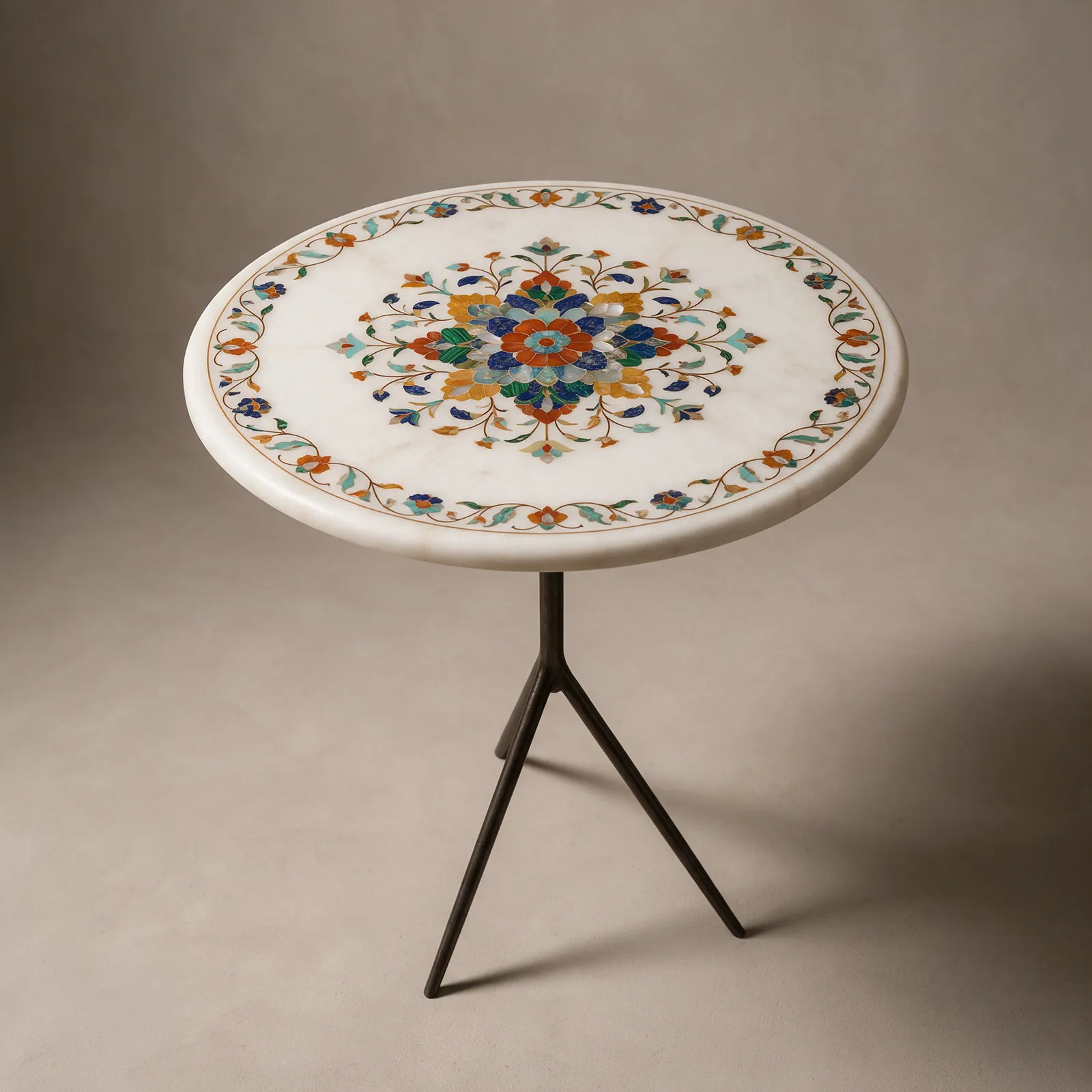
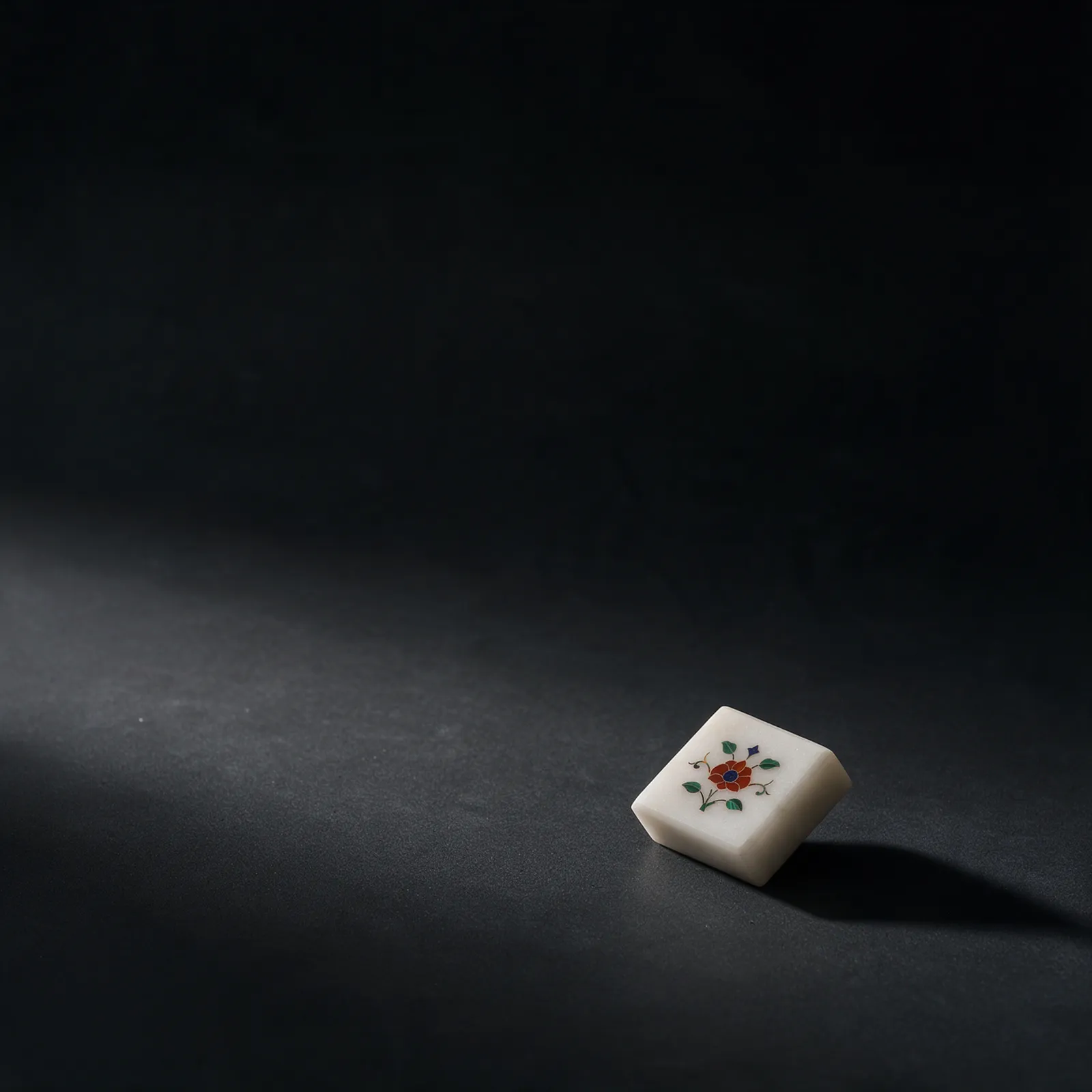
Parchin Kari: stone cut by hand, set into marble so flush a finger crossing a flower feels nothing.
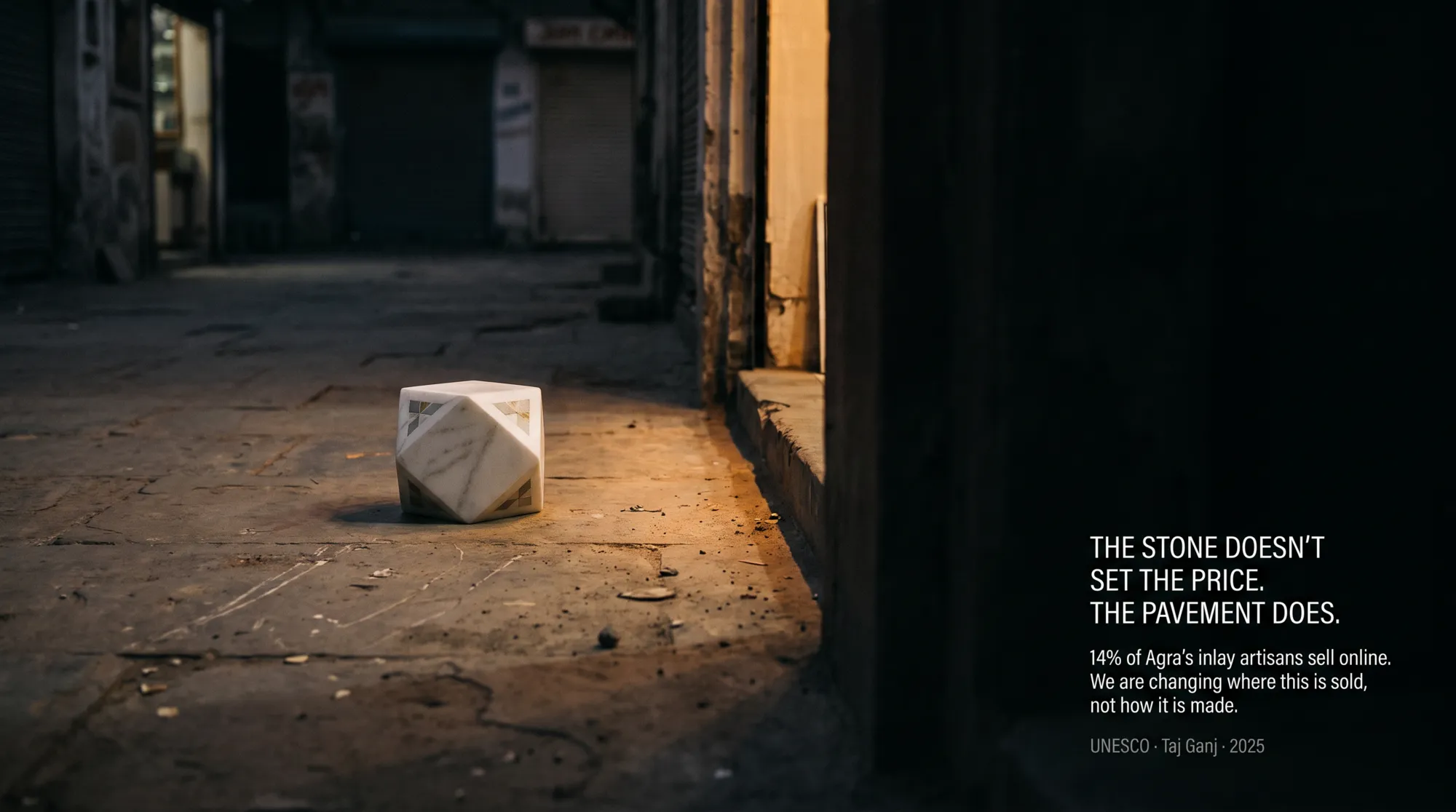
UNESCO's findings describe a craft under pressure. Only fourteen percent of artisans engage in e-commerce.
The technique isn't the problem. The channel is. A hot day, a seller calling out, no maker's name, a bargain both sides expect.
I ran the arithmetic on a coaster pair: five artisan-days, nine hundred rupees of stone and marble. Gate price, four to nine hundred. The labour is effectively free.
Then, a clue. As a teenager, the artisan Asif delivered a six-foot inlaid table to Agra's ITC Mughal Hotel. It sold almost immediately. A hotel instead of a pavement.
One sale isn't a market. But it proved something: nobody haggles over a signature. Give an object a maker's name and the buyer compares it to design.
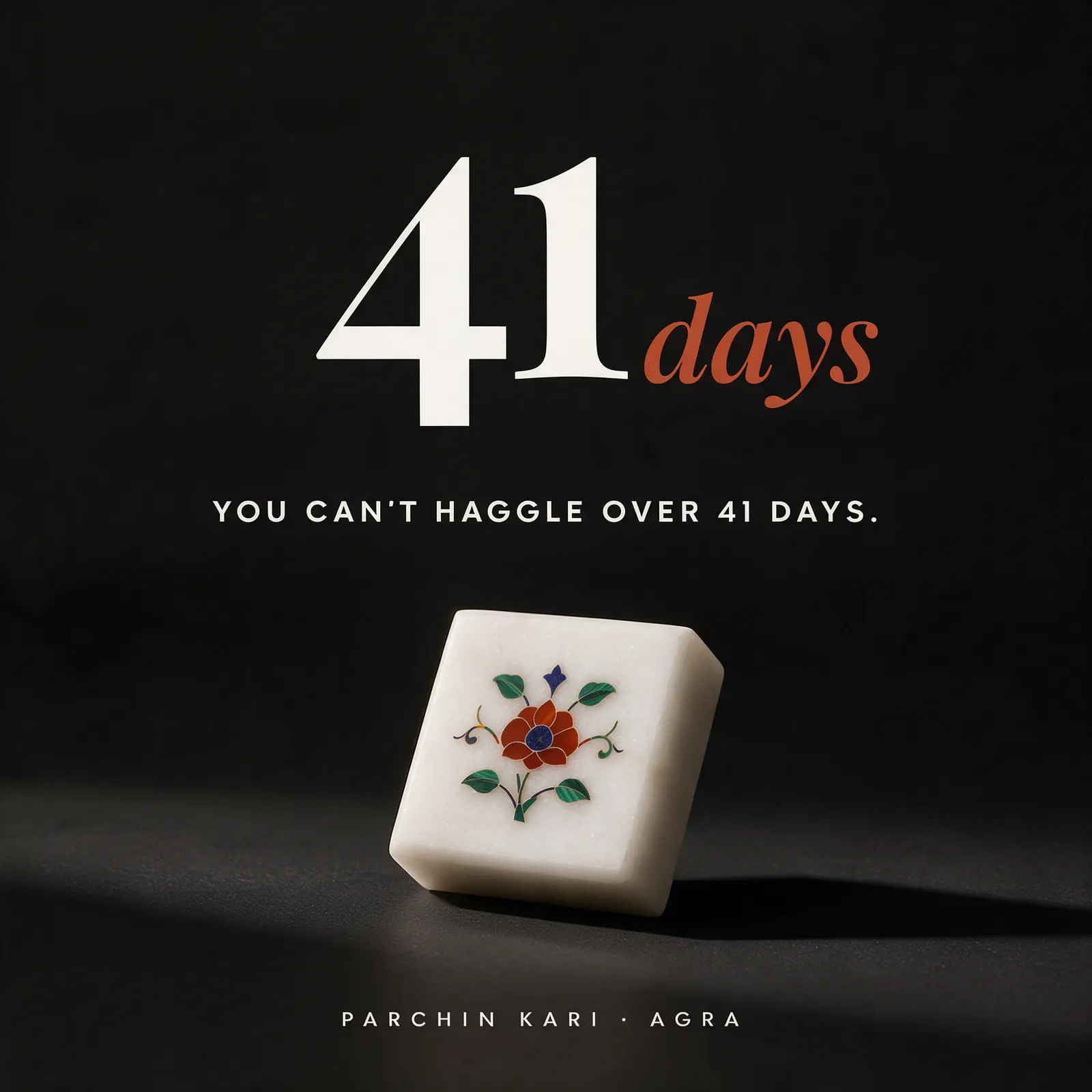
The concept: Parchin, the craft's own word. Every piece carries its working days and its maker. A price can be negotiated. A number of days cannot.
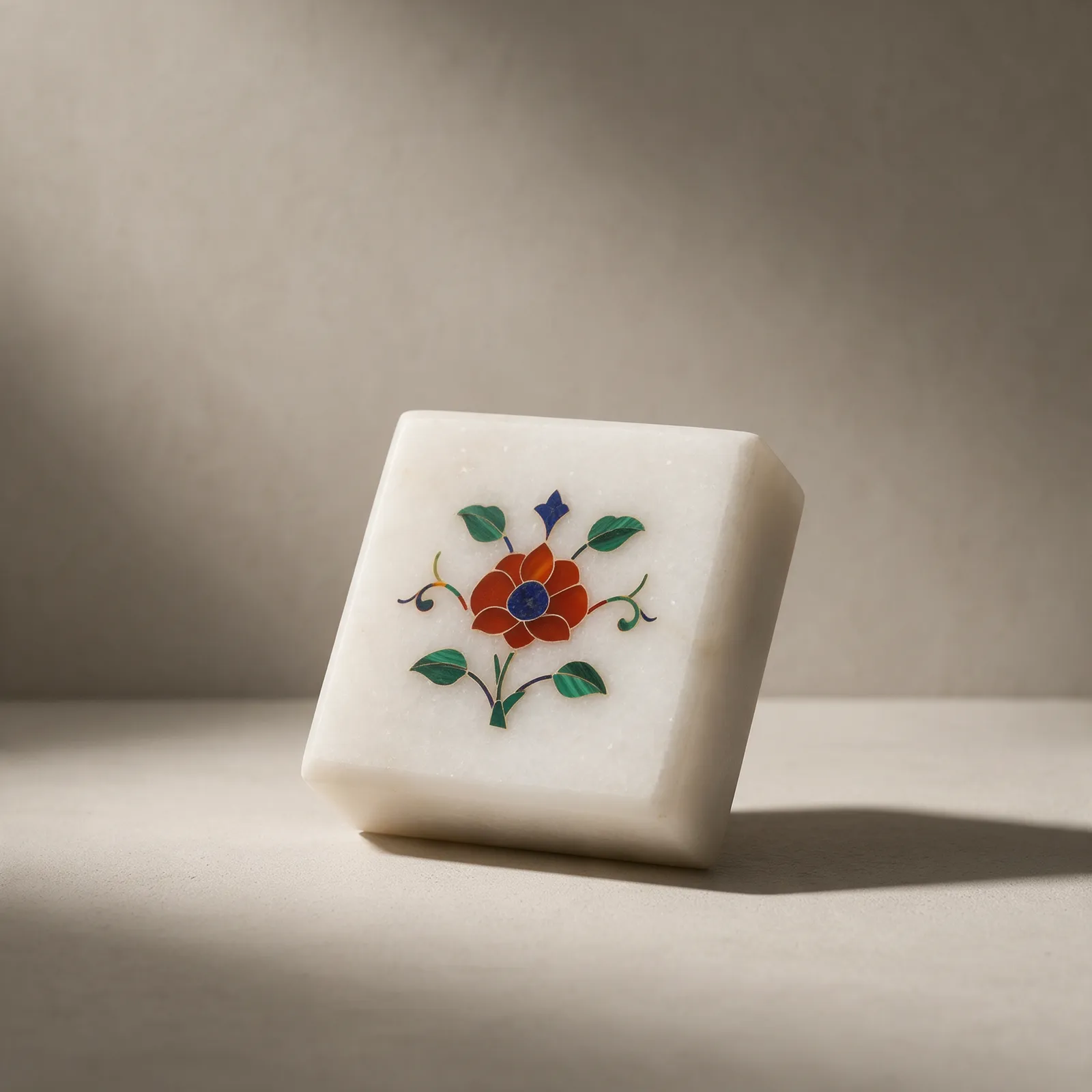
And a test you do eyes shut. Real inlay is flush. Resin leaves a seam. Touch both.
The numbers even cut our easiest product: coasters. And one question I'm leaving open: would the money really reach the artisan?
PARCHIN
Sold Wrong / 01 — Agra
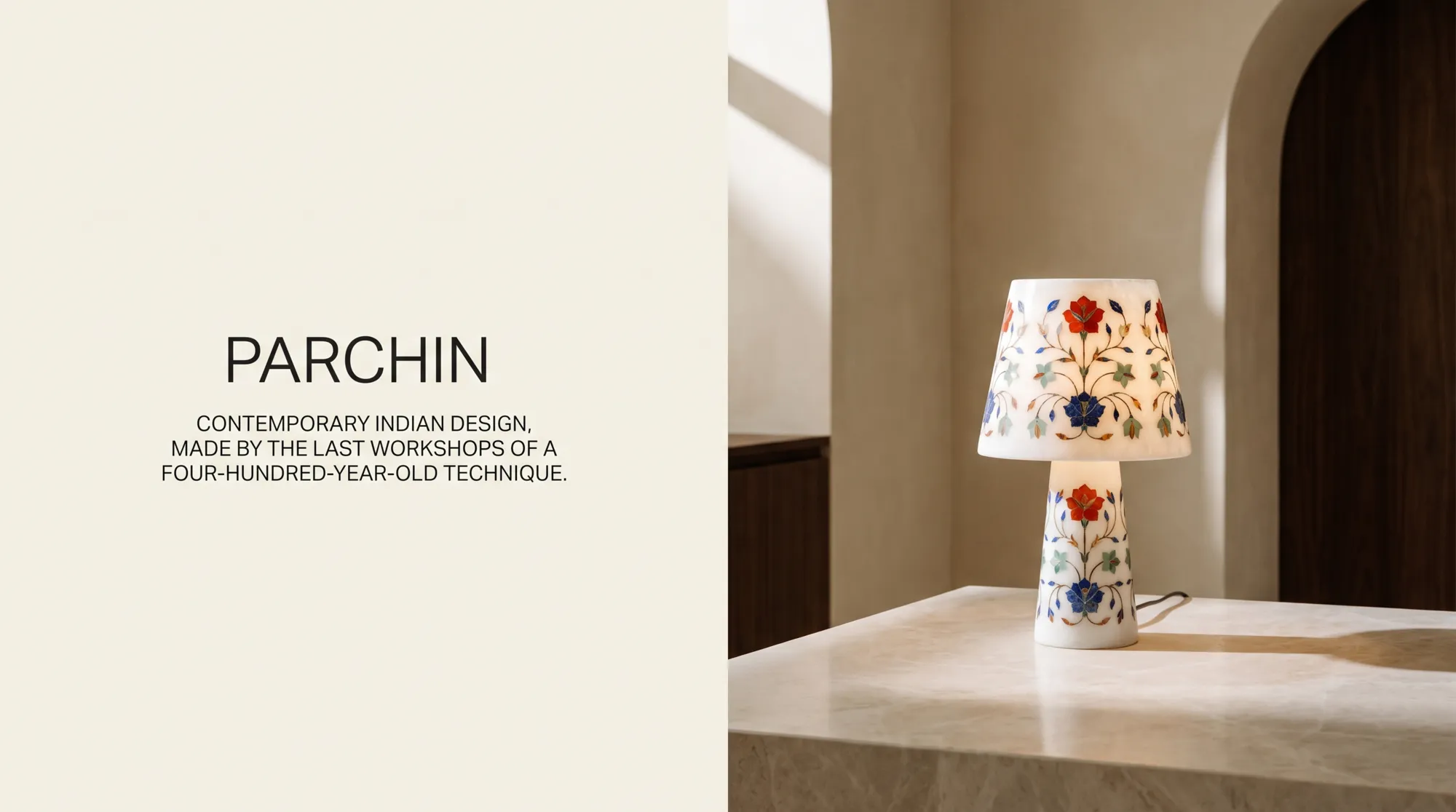
Contemporary Indian design, made by the last workshops of a four-hundred-year-old technique.
The brief
The craft that built the Taj Mahal earns less than the guides who point at it.
What was happeningThe craft
This isn’t a new technique.
Parchin Kari. Pietra dura. Semi-precious stone, cut by hand and set flush into marble. So flush that you can run a finger across a flower and feel nothing.
14%★of artisans sell online
68%★still work with outdated techniques
83★artisans linked to welfare schemes
The technique lives on in Taj Ganj, a few hundred metres from the Taj Mahal, through descendants of the original workshops. Income depends heavily on tourist footfall. Younger generations are moving away from the craft.
★ UNESCO, World Heritage & Local Communities programme, Taj Ganj, 2025
What wasn’t workingThe channel
The channel sets the price ceiling. Not the craft.
An inlaid plate at the Taj gate is bought at the end of a hot day, from a man calling out to someone already walking, after a negotiation both sides expect, with no name attached. Every element of that setting is engineered to end in a bargain.
The stone doesn’t set the price. The pavement does.
What wasn’t workingThe gate arithmetic
The labour is effectively free.
Real hand-inlay work, coaster pair
5 days ◆
Stone and marble
₹900 ◆
Typical gate price
₹400 to ₹900
Implied artisan day rate
minus ₹100 to zero
the artisan is subsidising the stone.
₹400₹900
per artisan-day, floored at zero
material cost still unpaid
Arithmetic from the copy: max(₹0, (gate price − ₹900) ÷ 5 days). Across this entire range, nothing remains for labour. The original negative day rate is retained above; this display floors it at zero and shows the material shortfall separately. ◆ Modelled illustration, not verified artisan earnings.
The “Hmm...”
Nobody haggles over a signature.
The moment an object carries a maker’s name, the buyer stops comparing it to the other souvenirs on the same street and starts comparing it to other design. The reference set changes. The price follows.
The receiptsIt has already happened once.
₹7,80,000★
Same craft. Same hands. A hotel instead of a pavement.
As a teenager, the artisan Asif delivered a six-foot inlaid table to Agra’s ITC Mughal Hotel. It sold almost immediately — and in UNESCO’s words, “the actual cost was only a fraction of that amount.” ★
One documented sale is an existence proof, not a market. Validating it properly needs buyer interviews at both the gate and a design retailer.
The moveNaming · Identity · Concept
Parchin
The craft’s own word. Plain, ownable, and it teaches the category every time someone says it out loud.
Don’t change the craft. Change what it means to buy it.
Carnelian
Lapis
Jade
Marble
The making · The brand device
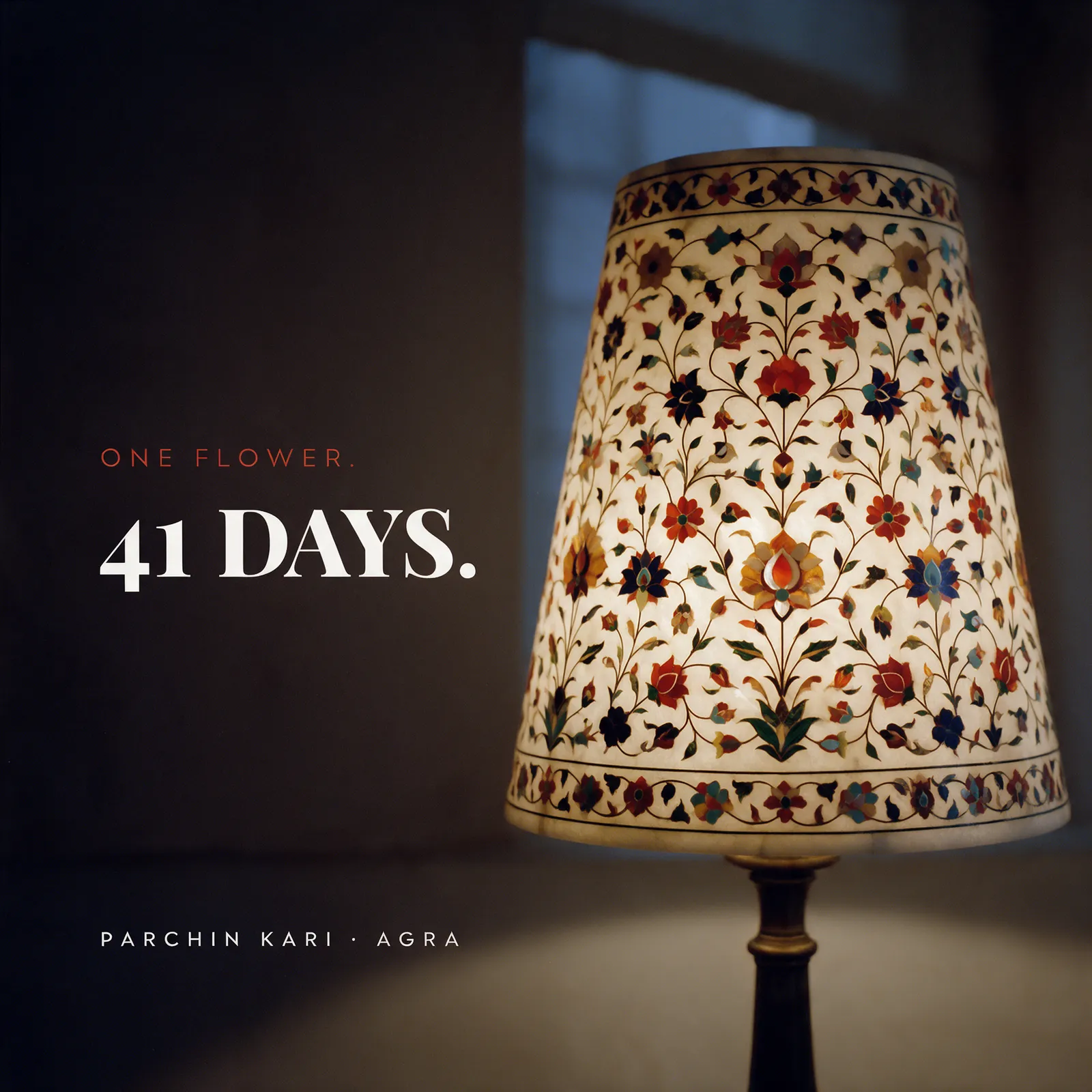
Count the days.
Day / 41
41 DAYSRAFIQ AHMEDNO. 4 OF 12
Every piece carries its working time and its maker. A price can be negotiated. A number of days cannot. It shifts the question from what is this worth to me to what did this cost someone.
The making · Packaging concept
Parchin · Count the days.
The box is the certificate.
There is no separate piece of paper to lose.
The making · The second layerThe touch test
Close your eyes and run your finger across it.
Move across either surface, swipe sideways, or press a tile to hold the test open. Keyboard: Tab, then Enter or Space. Illustrative comparison using the same concept image; the resin seam is drawn, not a photographed sample.
Real Parchin Kari is flush. Resin and machine work leave a seam. You can feel the difference with your eyes shut.
One gesture doing three jobs — the sensory experience, the authentication test, and the counterfeit defence. An educated buyer protects a craft better than a certificate does.
The making · The rangeModelled · ◆
Capacity first.
12 pairs of hands. 240 working days each. 2,880 artisan-days available in year one. ◆
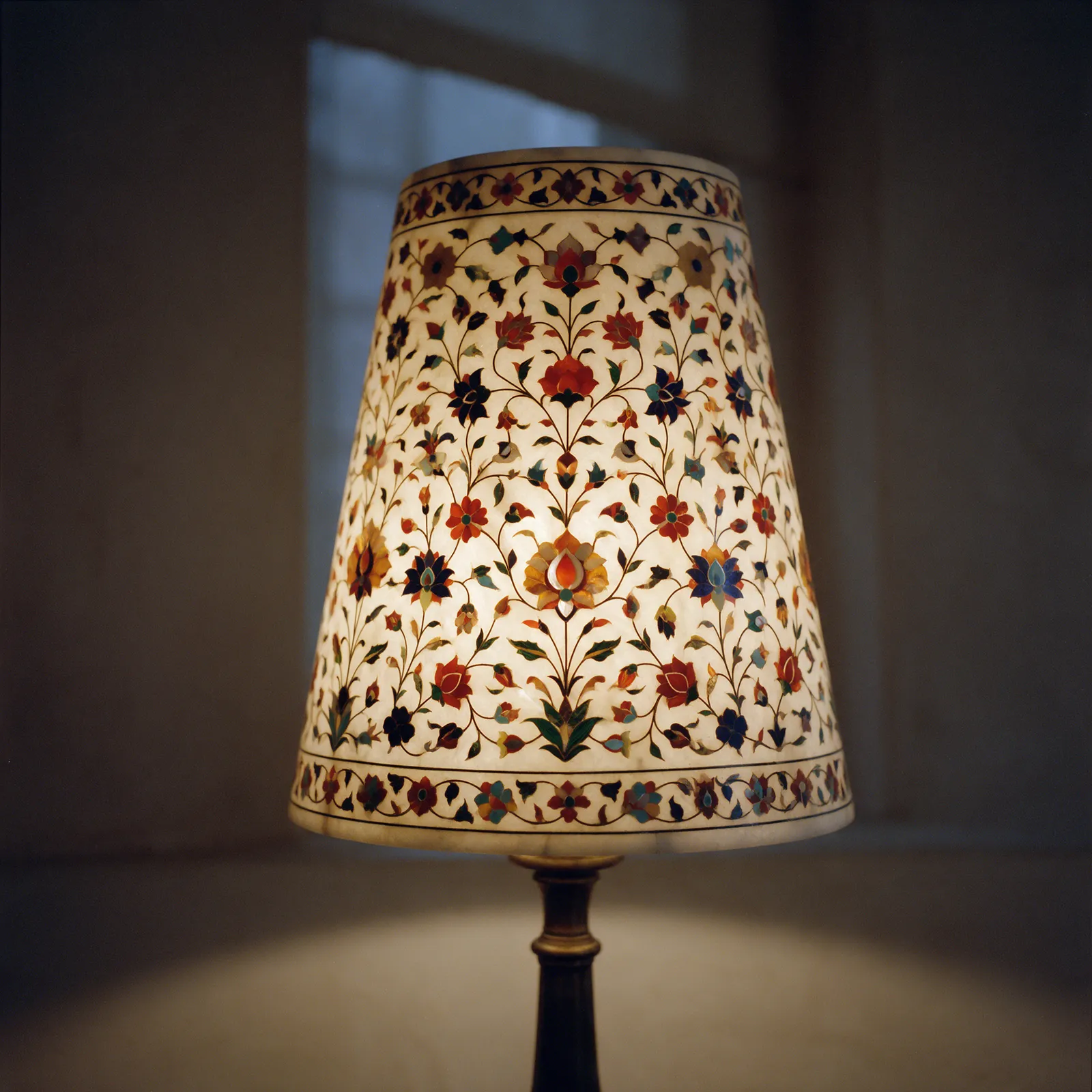
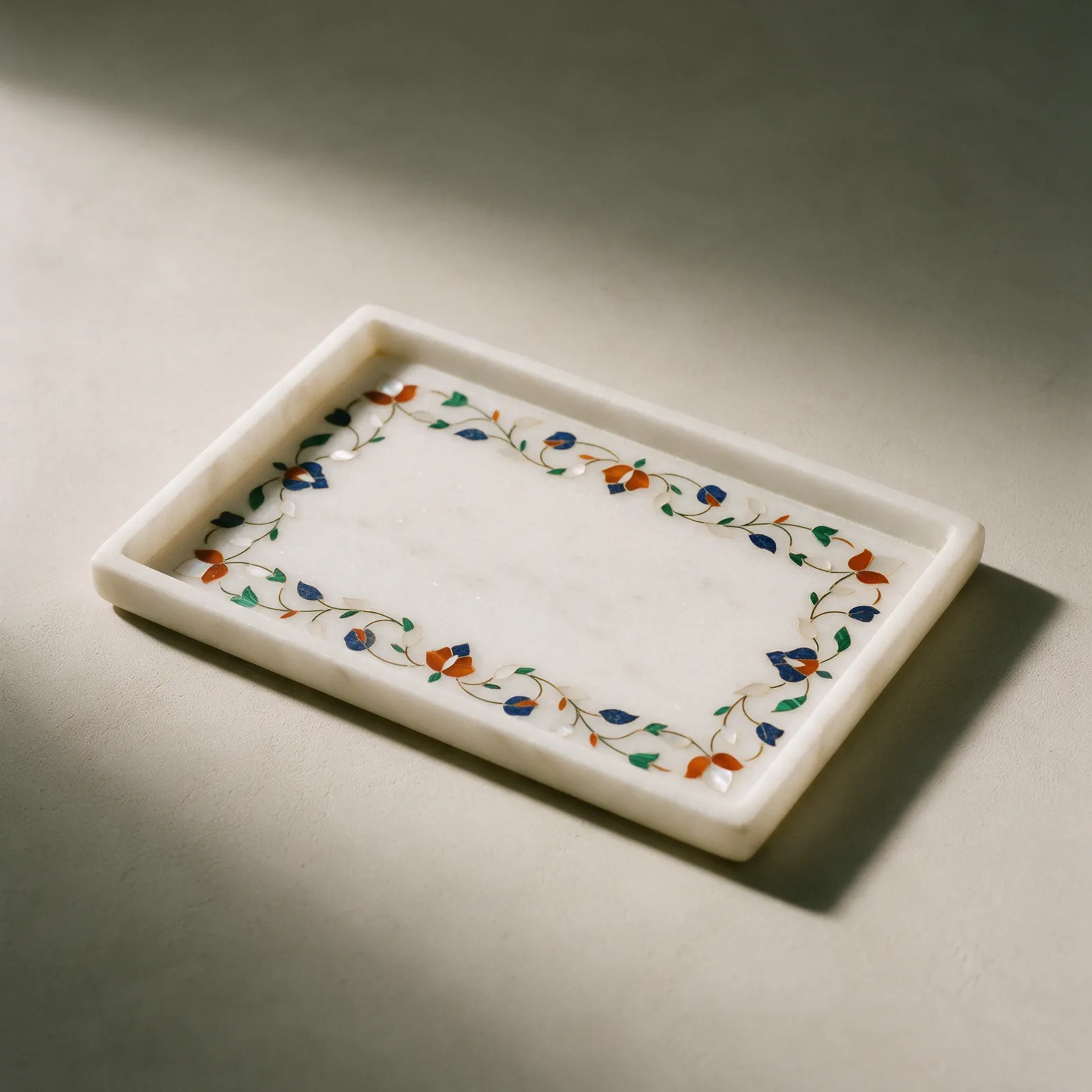
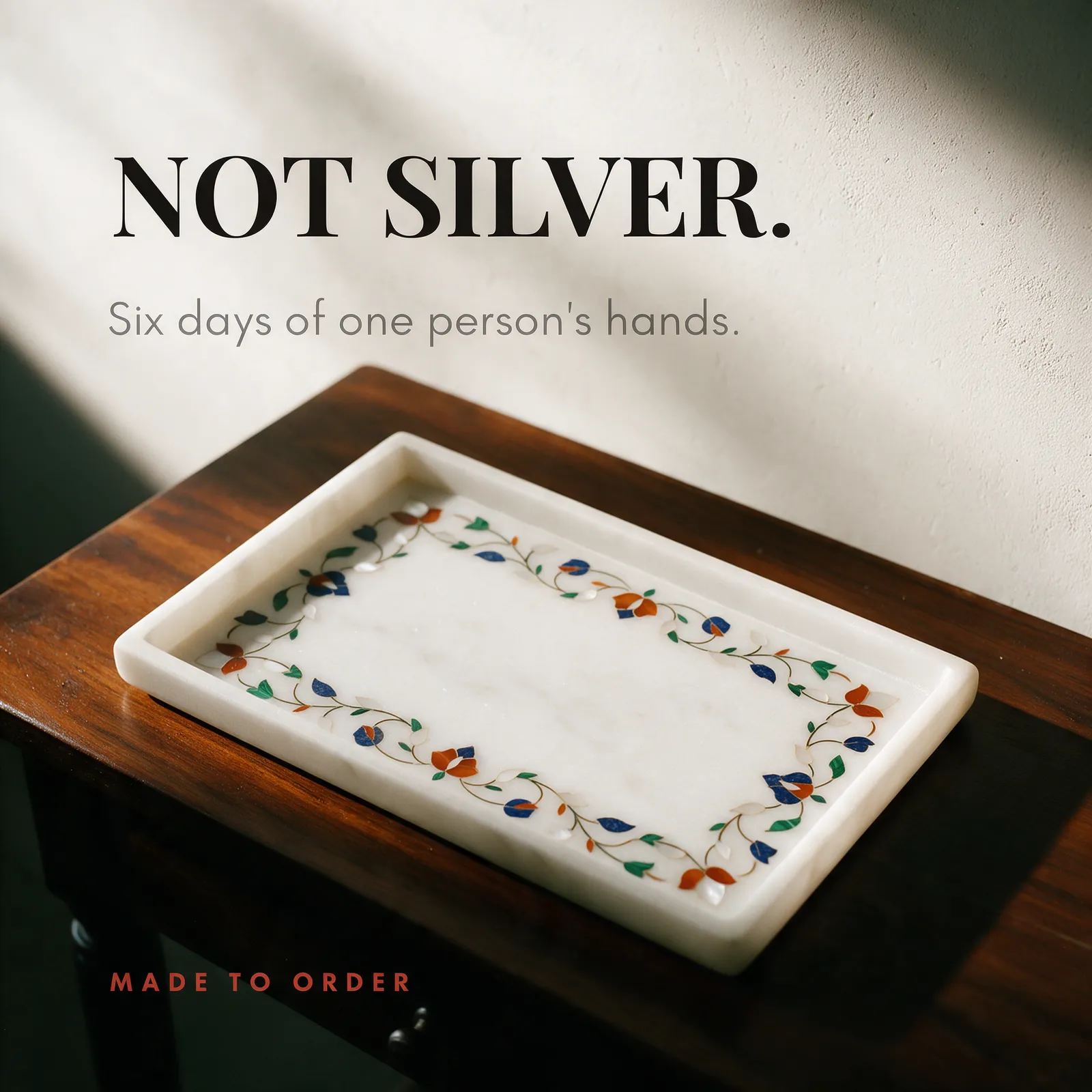
PaperweightEntryway trayTable lampStatement lampTable top
◆ Modelled range · Days / wage / retail / year 1 units
Product
Days
Wage
Retail
Units
Paperweight · single motif
2
₹1,700
₹6,000
120
Entryway tray · bordered
6
₹5,100
₹17,000
100
Table lamp · basic
6
₹5,100
₹20,000
115
Table lamp · statement
16
₹13,600
₹51,500
45
Table top · edition of 12
41
₹34,850
₹1,28,000
12
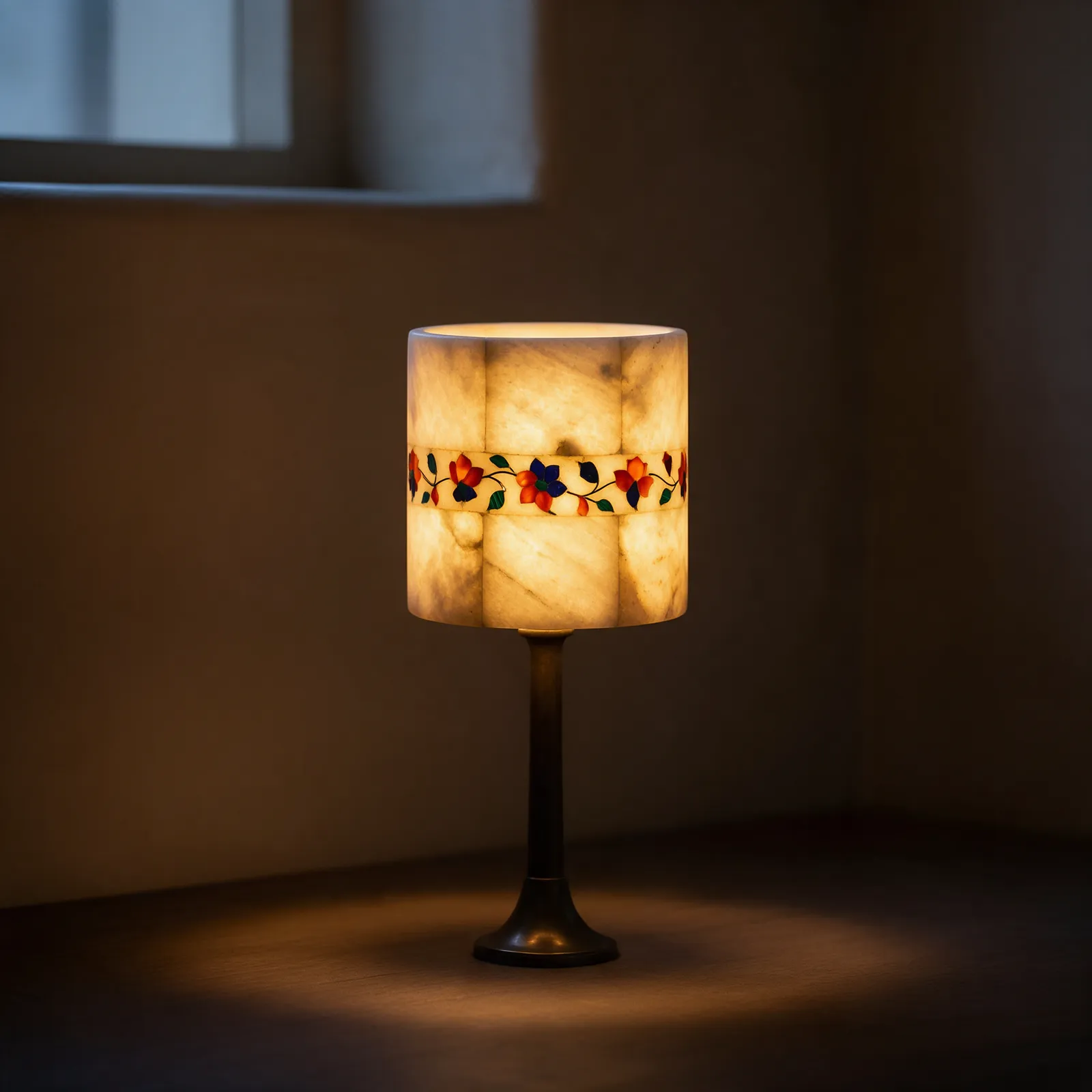
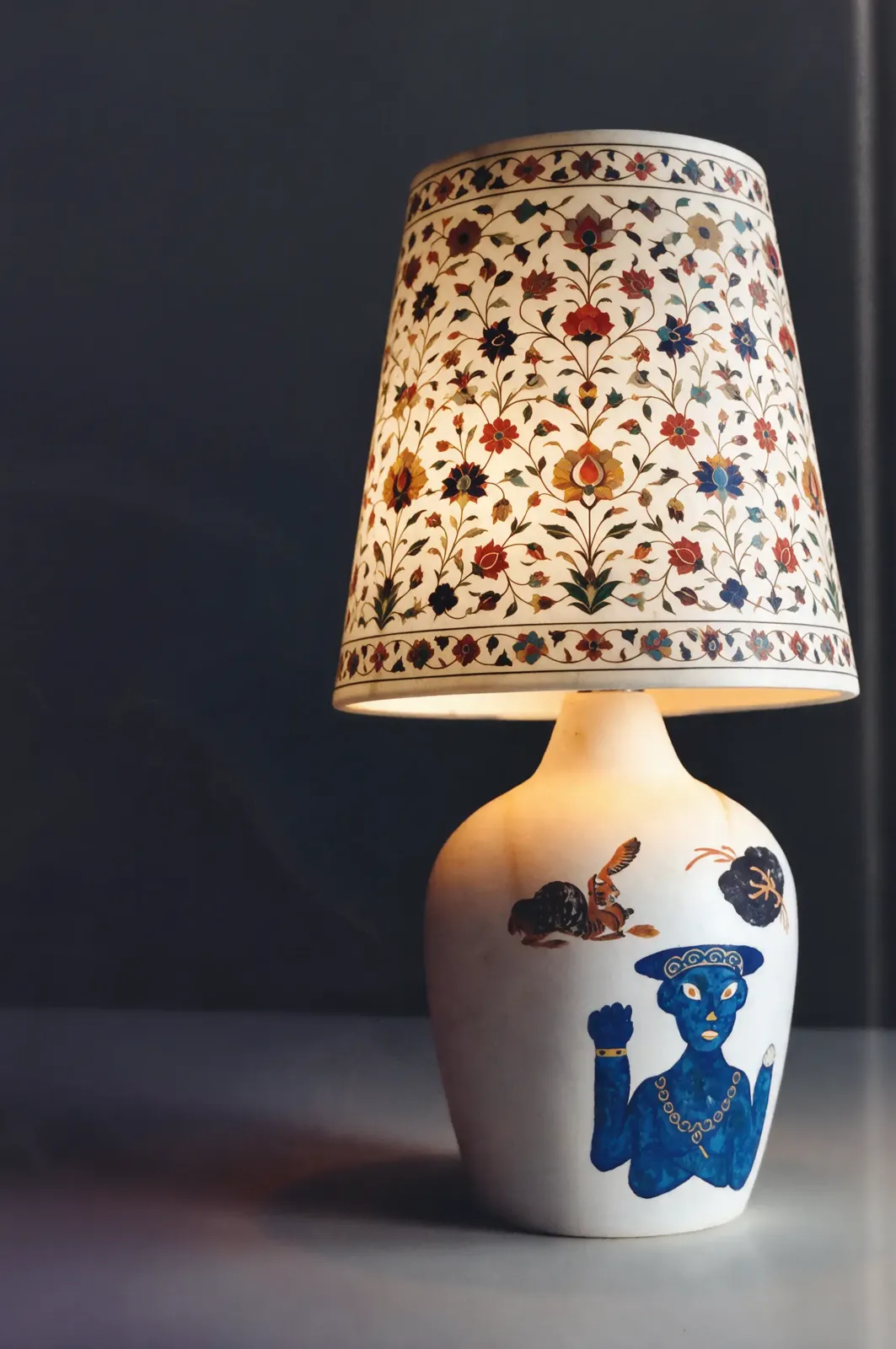
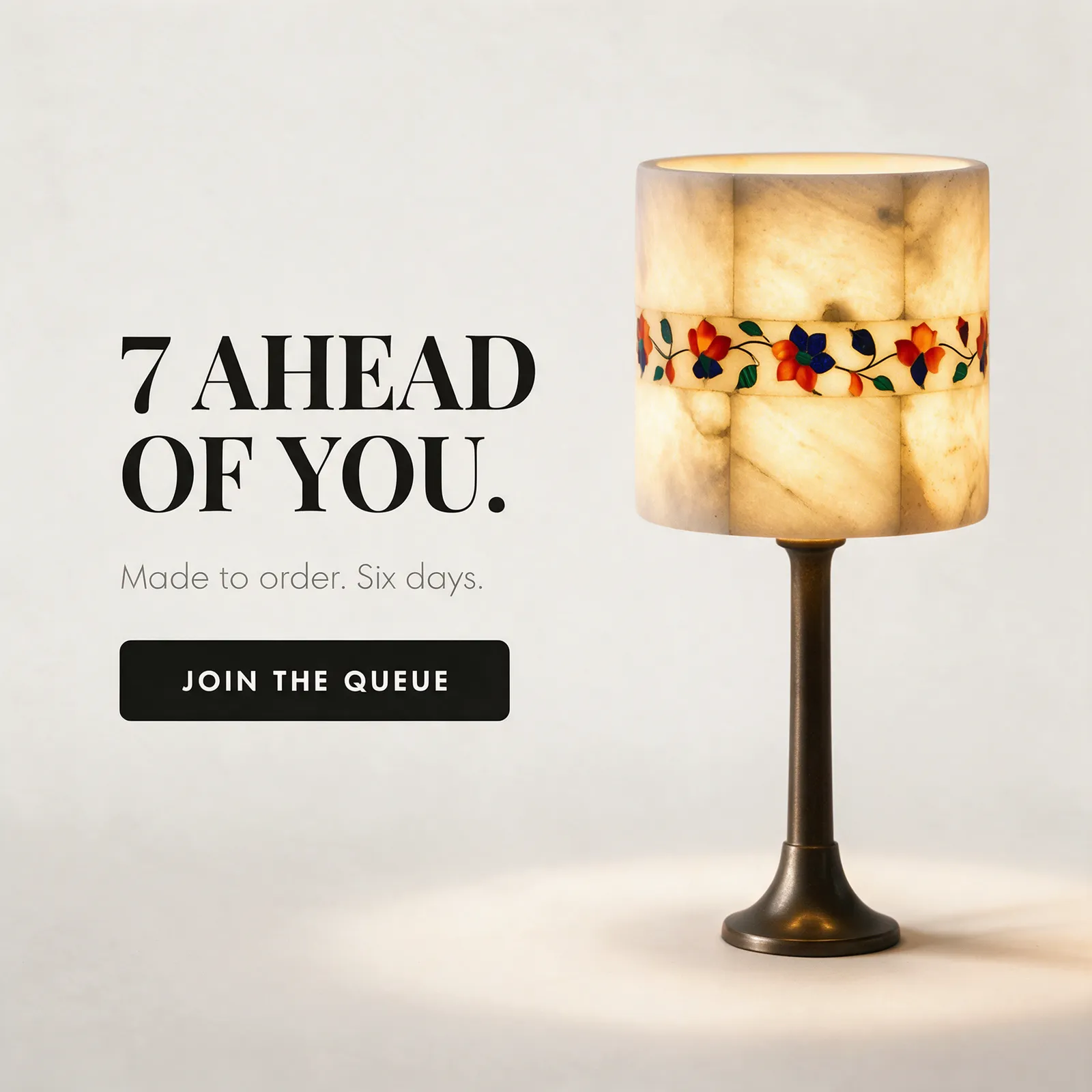
The basic lamp is the volume piece. The statement lamp is the thing that gets photographed. Marble is translucent. Light it from within and the flowers read like stained glass.
The making · The product we had to dropCoasters
The argument against our own easiest first sale.
A hand-inlaid coaster set
~5 artisan-days ◆
At ₹850 a day ◆
₹4,250 in wages alone
Accessible retail for coasters
₹3,000–₹5,000
Labour the price can fund
Under 1 day
Coasters are the obvious entry SKU and every craft brand sells them. This one can’t. Working out why was the most useful thing the model did.
so we drop it.
The making · Go-to-market conceptPhase 01 · Months 1–3
Prove the ceiling moves.
Own site plus two or three curated design retailers. Not Amazon — Amazon is a souvenir channel for this category and would rebuild the exact ceiling this brand exists to escape.
Drops, not a catalogue.
Three to four designs per collection. Limited, numbered runs. When they’re gone: they’re gone. Hand production cannot scale like factory production. Parchin doesn’t hide that constraint. It turns the constraint into the product.
The wait is the proposition.
Made to order. 41 days. Seven pieces ahead of you. Ships approximately 12 November.
Hero pieces: numbered editions. 12 pieces. 1 → 12. Never 13. The edition closes. Customers pre-order.
The making · Retail & audiencesPhase 02 · Months 4–9
Own the gifting season.
The store isn’t the experience. The fixture is.
Phase One: a branded bay inside two or three design retailers.
Real inlay × resin copy
Two identical pieces. One real. One not. Touch both. Don’t take our word for it.
Distribution is deliberately scarce. Not by owning stores — that is capital before proof — but by choosing few partners and saying no to the rest.
Not tourists.
The furnisher. Owns or is renovating a home. Already buys brands such as Nicobar, Good Earth and Jaipur Rugs. She wants provenance she can explain to a guest in one sentence.
The wedding gifter. An occasion purchase at a price she may not spend furnishing her own home. The gift needs to look expensive and mean something.
Corporate gifting. Secondary audience. An underserved space between craft and corporate plaque.
The making · Go-to-market conceptPhase 03 · Months 10–24
Scale the name. Not the output.
Export, museum and design-store retail, then architectural specification — a different buyer, a different sales cycle, arguably a different company.
One new designer.
Launch collection: one named Indian designer. New pattern. Four-hundred-year-old technique. That friction is the product.
From Collection Two: open design competition with NIFT · NID · SRISHTI. Winner is credited and paid. And the artisan is credited alongside the designer.
Not a courtesy. A condition.
If the designer gets the name and the maker doesn’t, the brief has recreated the problem it was supposed to solve.
No gated membership at launch. Instead: waitlist per drop. Collector registry. Every piece numbered. Owners registered. First access to the next collection.
There is no existing demand to harvest, so performance spend has nothing to capture. Demand has to be manufactured before it can be harvested — which makes brand budget first not the noble choice but the only functional one.
Don’t just show the object. Show what it cost to make.
41 days.
One flower, one artisan, fixed camera, time-lapse. No voiceover until the final frame.
Two more pillars: “Spot the fake” — how to tell inlay from resin, the most useful content in the category and nobody owns it. And “What to gift at an Indian wedding that isn’t silver.”
If people ask a machine, Parchin should have an answer.
The education content is also the GEO strategy. People increasingly ask a model rather than a search box, and structured, factual writing is what those systems surface — so the most honest content is also the most discoverable.
Not travel creators. Interior design. Architecture. Home. Design. License the best content and run it as paid creative.
The receipts · Modelled, not achievedYear one · ◆
This is a supply-led plan, not a demand-led one.
₹70.3L ◆Net revenue, year one
33.2% ◆Of net revenue paid to artisans — published, not claimed
95% ◆Artisan capacity used — 2,742 of 2,880 days
1 : 4.5 ◆₹21,112 AOV · ₹4,645 CAC
392 units is not an estimate of the market. It is what twelve pairs of hands can make in a year. ◆
Waitlist signups from “Spot the Fake” + AI-answer citations
It has a second life
Repeat purchase + collector-registry conversion
The craft survives
Artisans onboarded + under-30s entering workshops
The last one is the one that matters in ten years.
What I’d do differentlyThe strategy has questions.
What this brand will not do.
No phantom stock counters.
If ten are available, ten are shown. No fake countdowns. No invented scarcity. No fake waitlists.
No pity.
Guilt does not buy a ₹20,000 lamp. The decline of the craft should be communicated with dignity.
No “affordable luxury”.
It caps the price, and the artisan’s margin is the first thing squeezed when the price is capped.
Can artisan income splits be verified?
Not without fieldwork. Real launch → artisan interviews first.
Can design collaboration become extraction?
Yes. Co-credit isn’t a courtesy. It’s a condition.
Counterfeits
Education is a defence. Not a guarantee.
Drops limit revenue
Deliberately. This is not a year-one scale-curve story. Pretending otherwise would make the strategy weaker.
The question I can’t answer yet
Who actually owns the value?
Would the money really reach the artisan? Or would Parchin simply create another intermediary?
That depends entirely on the ownership model. A cooperative structure may answer that question better than a brand-owned structure. It may also be harder to fund.
I would rather leave that question open than pretend the strategy has solved it.
So what? · The proposition
Don’t change the craft. Change where the value lives.
Souvenir
→ Design
Anonymous
→ Named
Bargained
→ Priced
Tourist
→ Collector
Invisible labour
→ Counted labour
Pavement
→ Design retail
One-off sale
→ Relationship
Parchin · Sold Wrong / 01 — Agra
41 days. One maker. One piece. No thirteenth.
Contemporary Indian design, made by the last workshops of a four-hundred-year-old technique.
The honest noteIndependent, speculative and self-initiated. Not commissioned, not approved, not affiliated with UNESCO, who do not endorse commercial ventures — their published research is cited here as evidence of a market failure. ★ marks a sourced figure, ◆ a modelled one.