Yashika, in the making
Case study 02 · Real work The Channel P&L Gazette Vahdam India · Amazon India · 2025–26

Brand growth / E-commerce / P&L

I stopped asking what we should launch next.

100+ SKUs. 10 categories. ₹52–57 lakh a month. And a contribution margin that was quietly going the wrong way.

▶Watch the story · 60sOnce upon a P&L…

A glass of blue butterfly pea tea with lemon
100+SKUs
10Categories
₹52–57LA month
16% → 24%Contribution margin

The story behind the slides

So, here's what happened.

An illustrated short, written from this case study. Real work at Vahdam India, 2025–26. Margin figures from the channel P&L; the D2C and social teams also built demand. Illustrations, narration and music were made with AI tools; every fact comes from the case study below.

Read the transcript

Everyone kept asking what we should launch next. I stopped asking.

I ran Vahdam's Amazon India business: over a hundred SKUs, ten categories, fifty-two to fifty-seven lakh rupees a month.

Revenue looked healthy. The P&L underneath didn't. We were spending to stay visible, and visibility kept getting more expensive.

So I went looking for leaks. Ads bidding on terms that never converted. SKUs nobody bought. A brand store built once and left alone.

The clue was in our own recipe pages. We sold butterfly pea tea as wellness. Our recipes used it as a blue drink that turns pink with lemon.

Fix what's broken before building what's new. Six levers: pricing, keyword negation, campaign mix, ABC analysis, the brand store, and samplers and gift ranges.

Same product. Same price. A different argument. Plus negative keyword lists that kept growing, and a spreadsheet that ruined a Tuesday.

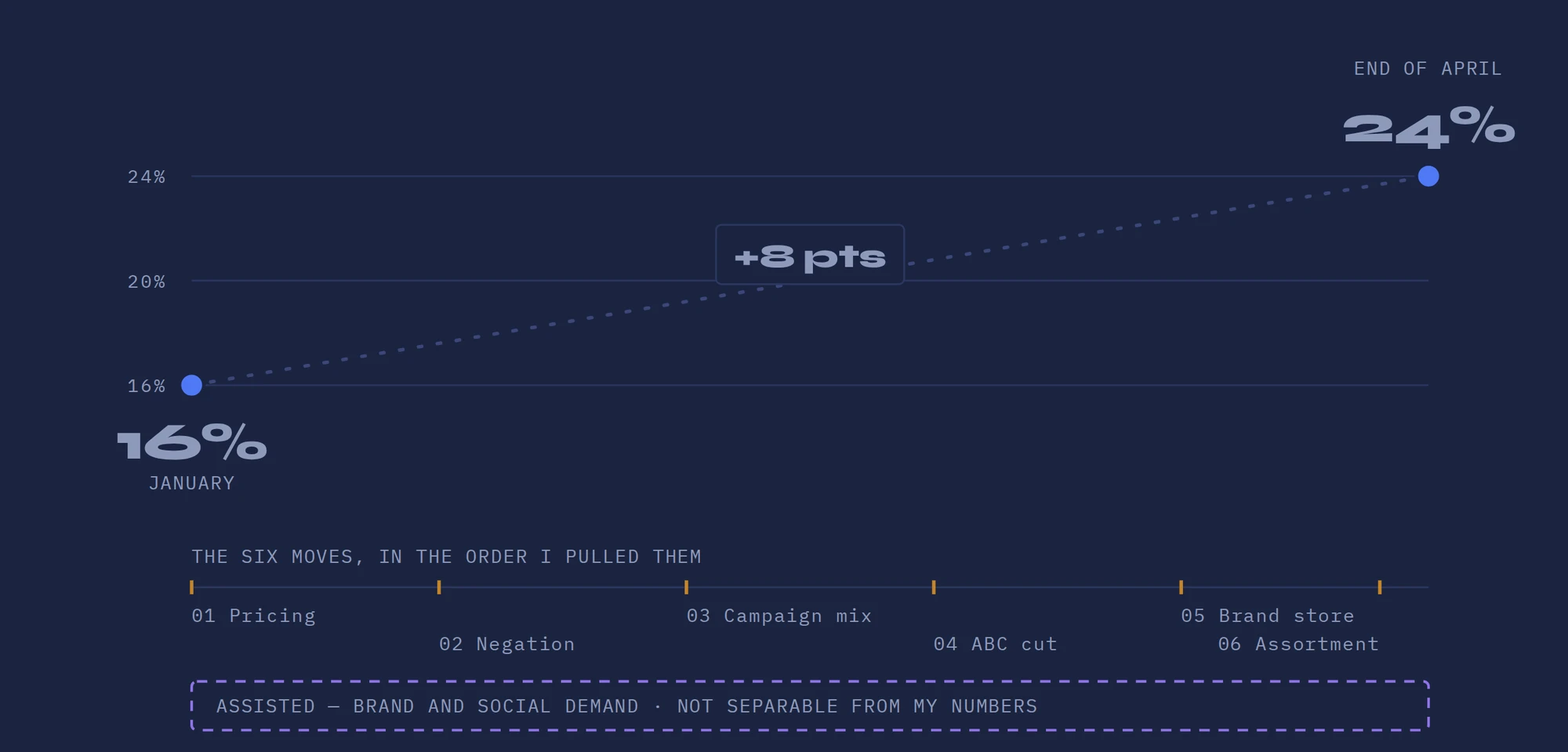
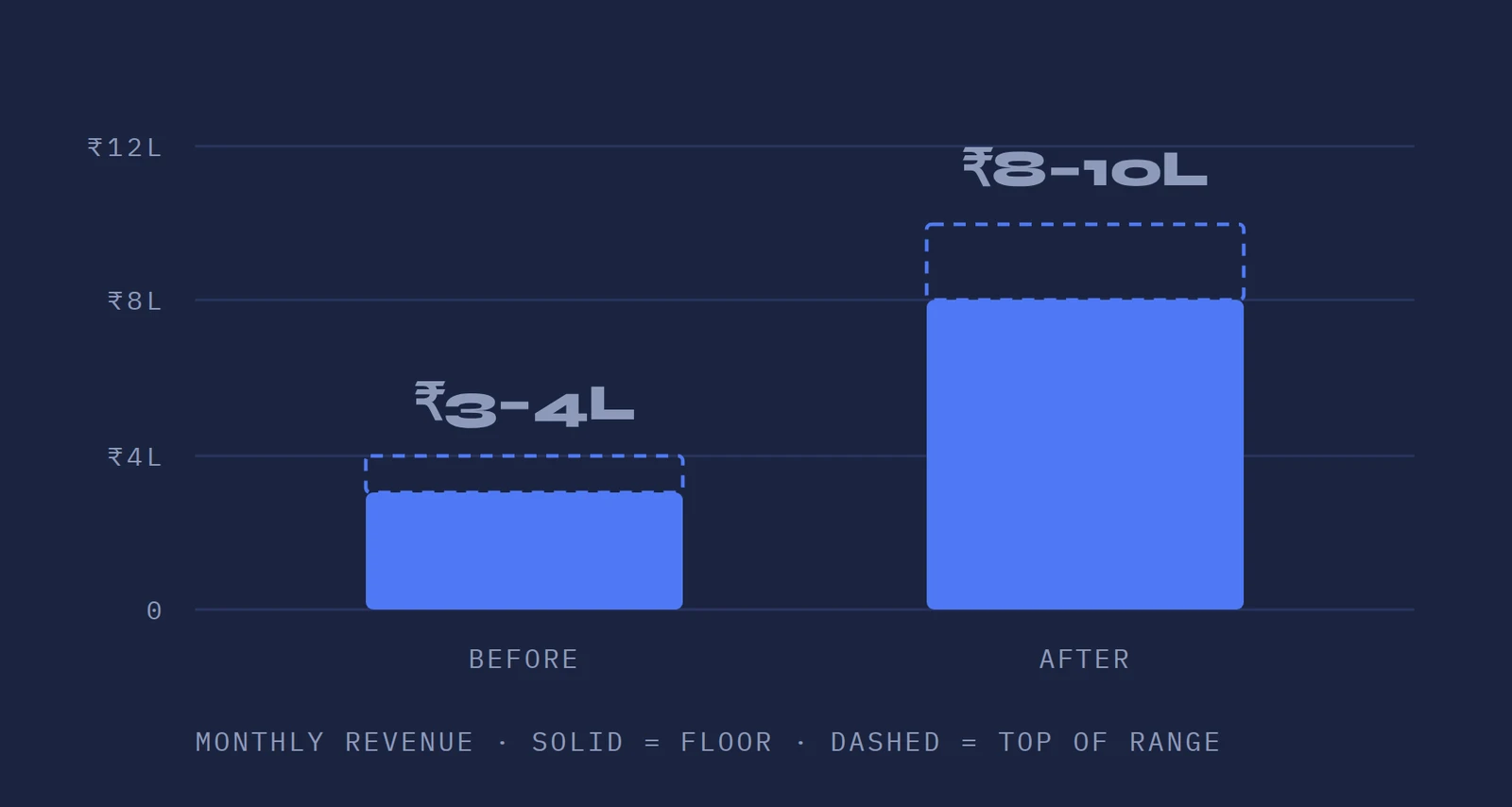
Contribution margin went from sixteen to twenty-four percent, January to the end of April. Turmeric Curcumin grew from three or four lakh a month to eight to ten.

But I can't take credit for all of it. The D2C and social teams were building demand in a different room. A good part was mine. Some was theirs.

We didn't do anything revolutionary. We mostly fixed what was broken. Sometimes the margin is already sitting inside the business.


The brief

The headline target was growth. The number that actually mattered was contribution margin.

I ran Vahdam's Amazon India business across assortment, pricing, promotions, advertising, content, inventory and the channel P&L. For a while, I was treating growth and margin as if they were the same problem.

They weren't.

What was happening

“Revenue looked healthy. The P&L underneath it didn't.”

Tea is crowded. Amazon is even more crowded. We were spending to stay visible, and staying visible was getting more expensive every quarter.

What wasn't working

I went looking for the leaks. There were several.

Ads were bidding on search terms that had never converted. The catalogue carried SKUs nobody bought but everyone still had to forecast, store and discount. The Brand Store had been built once and left alone. Pricing had been set at some point and then inherited. And the listings described the products without giving anyone a reason to choose them.

Plug the leaks. Press each label.

16%January24%End of April

the order mattered more than any single lever

Five leaks. Start with one.

The line illustrates closing the gaps, not the contribution of each lever. Only the two endpoints are measured results.

none of this was dramatic. that's exactly why it had survived.

The “Hmm…”

What do we already have that isn't working?
Butterfly pea tea
Blue, until you add lemon

I read our listings the way a customer would, then went back to our own A+ content and recipe pages. There it was.

We were selling butterfly pea flower tea as a wellness product. Our own recipes were using it as something far more interesting: a blue drink that turns pink when you add lemon. Nobody in India was searching for that yet, so there was no demand to harvest. The opportunity was to create the reason to search.

The product had a story.
We just weren't leading with it.

The move

Fix what was broken before building what was new. Six levers, in the order I pulled them.

one move sets up the next. keep scrolling.

01

Pricing

Reset around contribution margin rather than historical habit.

02

Keyword negation

Cut search terms that had spent without ever converting.

03

Campaign mix

Rebalanced Sponsored Products, added Sponsored Brands and Display, so we stopped buying the same click twice.

04

ABC analysis

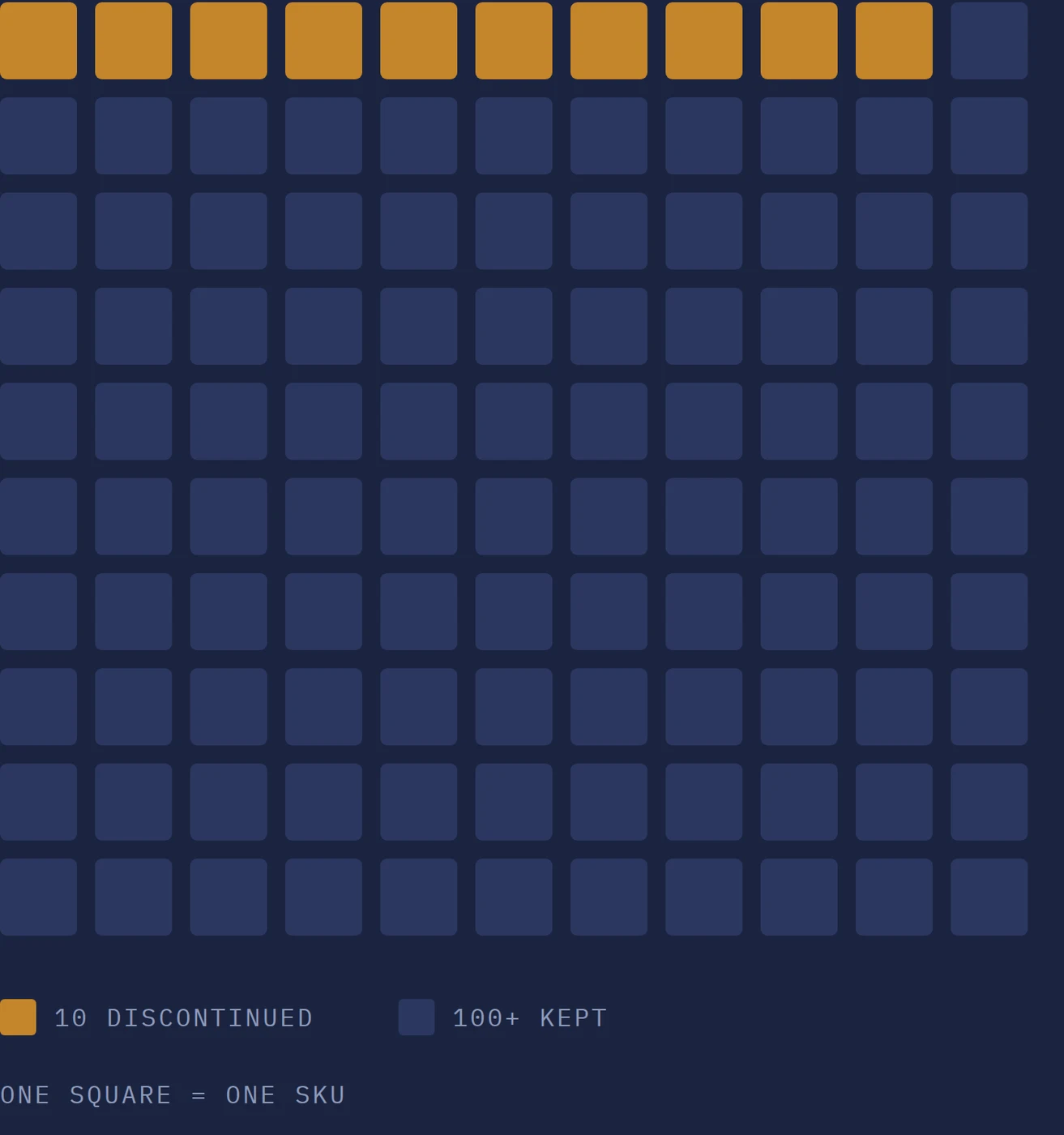
Cut the long tail. Fewer SKUs planned properly, not 100+ planned badly.

05

Brand store

Rebuilt as a place to browse the range, not a page that simply existed.

06

Assortment

Samplers and gift ranges: the cheapest way to get someone to try four teas instead of choosing one.

The making

Where strategy stopped being a plan and started becoming pixels.

Listing copy, imagery, A+ content and ad targeting, rewritten to lead with what the product does for the person rather than what it contains. Same product. Same price. A different argument.

Turmeric Curcumin listing image
A+ content for Turmeric Curcumin
Shatavari listing image
A+ content page
Rebuilt Amazon brand store
Brand store gifting section

Then the less glamorous work. Negative keyword lists that kept growing. An ABC analysis that meant telling people their SKU was going. A Brand Store rebuild nobody had asked for.

enough strategy. here's a spreadsheet that ruined a Tuesday ↓

The receipts, drawn from the channel P&L
Contribution margin rising from 16% in January to 24% by end of April
Turmeric Curcumin monthly revenue from ₹3–4L to ₹8–10L
Catalogue grid: about ten SKUs discontinued out of 100+
The receipts
16% → 24%Contribution margin, January to end of April
₹3–4L → ₹8–10LTurmeric Curcumin, a month. Scaled, not launched
₹52–57LMonthly Amazon business, 100+ SKUs, 10 categories

These numbers come from the channel P&L I owned. Anything I couldn't evidence stayed off the page.

What I can't take credit for

The margin came out of the Amazon channel. The demand didn't all come from it.

While I was cutting waste, the D2C and social teams were building brand demand, putting content into the market every week and sending people to Vahdam already knowing who we were. Someone who lands on a listing after seeing a brand three times behaves differently from someone who found it through a search ad. That shows up in conversion and cost of sale, and I can't cleanly separate it out.

So the eight-point improvement is real. A good part of it was mine. Some of it was enabled by people working in a different room. I'd rather say that than claim the whole number.

So, what?

We didn't do anything revolutionary. We mostly fixed what was broken. and that was the finding.
What I'd do differently

Eight points of margin came out of a business that already existed: pricing, negative keywords, campaign mix, a catalogue cut, a better Brand Store and better arguments on the product pages. No new agency. No bigger budget. No shiny new product. It taught me to distrust my first instinct, which is usually to make something new.

I'd have read our own content on day one instead of halfway through. And I'd have built the measurement for the content changes before making them, not after. I know the listing got better. I can't tell you exactly by how much. That's on me.